












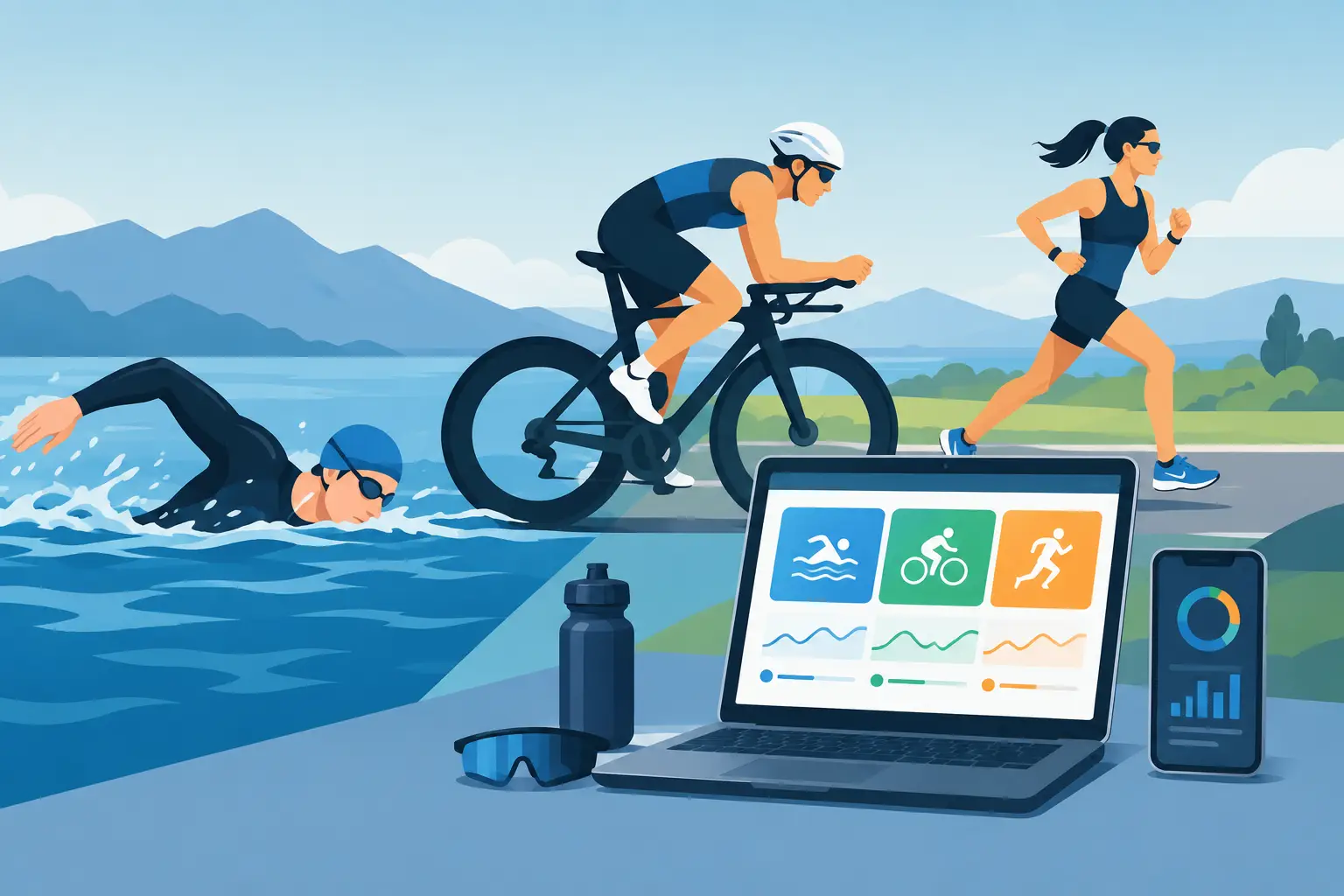
A 5:00 am pool session, a busy workday and a long ride planned for Saturday leave little room for guesswork. The best triathlon training platforms turn a demanding three-discipline schedule into a clear sequence of sessions, recovery and progression. But the right choice is not simply the app with the most graphs. It is the system that helps you execute the work that matters, adjust when life intervenes and arrive at race day prepared rather than merely tired.
For serious age-group athletes, a platform should create clarity without making training another administrative task. It needs to account for swim, bike and run load, show whether fitness is moving in the right direction, and give a coach or athlete enough context to make sound decisions. That standard separates a useful training environment from an online library of workouts.
What the best triathlon training platforms should do
A triathlon platform has a harder job than a single-sport training app. It must organise multiple sessions across the week while recognising that a hard bike interval session can compromise the following day's run, and that a missed swim is not always a problem worth chasing. The calendar must be easy to read on a mobile, but the underlying training load needs to be detailed enough to guide progression over months.
The essentials are practical. Look for structured workout delivery to devices and indoor trainers, reliable data syncing, post-session feedback, and a calendar that allows sessions to be moved without losing the logic of the week. Good reporting should show patterns in volume, intensity, fatigue and compliance. Better platforms also support coach comments, athlete notes, wellness tracking and event-specific planning.
No platform can replace judgement. Heart rate can be distorted by an Australian summer, power may not tell the full story after a poor night's sleep, and pace is rarely the whole answer on a hilly run course. The value lies in combining the numbers with training context.
Leading triathlon training platforms compared
| Platform | Best suited to | Main strength | Consider before choosing | | --- | --- | --- | --- | | TrainingPeaks | Coached athletes and self-directed racers | Detailed planning, workout delivery and established performance metrics | The depth can feel technical without clear coaching direction | | Final Surge | Athletes who want a clean coach-athlete workspace | Straightforward calendar, communication and flexible workout planning | Analytics are less central than in data-heavy platforms | | TriDot | Athletes wanting algorithm-led triathlon programming | Triathlon-specific prescription and adaptive planning | Less freedom for athletes who prefer to build their own programme | | 2PEAK | Athletes who value dynamic adjustment around availability | Plans that respond to training feedback and changing schedules | Works best when data and feedback are entered consistently | | Athletica | Self-coached endurance athletes comfortable with data | Automated fitness modelling and daily training guidance | Requires judgement to interpret recommendations within the wider race plan | | TrainerRoad | Triathletes whose biggest limiter is bike performance | Strong cycling workout execution and adaptive bike training | It is not a complete triathlon coaching environment on its own |
The best platform depends on the level of support required. A first-time Olympic-distance athlete with a fixed routine may be well served by a simple plan and clean calendar. An athlete targeting a competitive Ironman age group needs greater control over training load, fuelling practice, long-session timing and the interaction between disciplines.
TrainingPeaks for coached performance development
TrainingPeaks remains a leading choice for athletes working with a coach because it handles the practical rhythm of structured training well. Sessions can be planned well ahead, delivered to compatible devices and reviewed against the intended target. The platform also gives coaches a common language for reviewing volume, intensity and accumulated load.
Its advantage is not that every athlete needs to become fluent in performance charts. Its advantage is that the training plan can be built with precision, then modified without losing sight of the larger block. A coach can see when a key brick session has been completed, whether power targets were realistic and whether repeated low-quality sessions point to fatigue rather than a lack of commitment.
The trade-off is complexity. Athletes who stare at every metric can mistake measurement for progress. Use the dashboard to support training decisions, not to turn an easy recovery ride into an examination.
Final Surge for simple structure and communication
Final Surge suits athletes who want an organised, less technical training home. Its calendar is intuitive, session instructions are clear, and the coach-athlete workflow keeps the focus on completing the work. For a triathlete balancing family, travel and a full-time job, that simplicity can be a genuine performance advantage.
It is particularly effective when the programme is coach-led and the athlete wants clear daily direction rather than deep analysis. A well-written session, timely feedback and consistent communication can matter more than an extra layer of modelling. Athletes wanting extensive performance analytics may prefer another system, but not every race preparation requires them.
TriDot and 2PEAK for adaptive programming
TriDot and 2PEAK appeal to athletes who want a plan that responds to personal data and changing circumstances. This is valuable in triathlon, where a work trip, illness or a hot weekend can alter the best training choice for the next several days.
TriDot is built specifically around triathlon planning. Its approach is attractive for athletes seeking a structured, algorithm-led programme across swim, bike and run, particularly when they value prescribed training over designing sessions themselves. The limitation is that some experienced athletes and coaches prefer more control over the rationale and construction of every training block.
2PEAK also focuses on adapting training based on feedback, availability and performance information. It can be a strong option for athletes with inconsistent schedules, provided the input is honest and regular. If sleep, stress and missed sessions are not recorded accurately, the system is making decisions with incomplete information.
Athletica and TrainerRoad for targeted self-coaching
Athletica is best considered by disciplined self-coached athletes who want automated modelling and daily guidance across endurance training. It can help identify when the plan needs more load, less load or a recovery focus. This is useful for experienced athletes who understand their own response to training and are prepared to question a recommendation when race preparation, travel or health says otherwise.
TrainerRoad has a narrower but valuable role. For many Australian triathletes, the bike leg is where the largest performance gain is available, especially when indoor training is required before work or during poor weather. Its strength is structured cycling progression and workout execution. It should be paired with a deliberate swim and run framework, because better bike fitness alone does not create a balanced triathlon programme.
How to choose a platform for your race goal
Start with the decision you need the platform to solve. If you need accountability, feedback and an individual plan, prioritise the coach-athlete experience over automated recommendations. If your schedule changes weekly, adaptive planning and simple rescheduling matter more than a large workout library. If you already have a coach, use the platform they can monitor efficiently rather than forcing a separate system into the relationship.
Then consider the race. Sprint and standard-distance athletes may benefit most from consistency, skill development and sensible intensity distribution. Long-course athletes need a platform that can organise progressive long rides, long runs, bricks, fuelling rehearsals and recovery without turning every weekend into a test. The longer the event, the more important it becomes to see the training block rather than just the next session.
Finally, test your willingness to use the data. A platform only works when sessions are completed, feedback is recorded and adjustments are made with discipline. Choose the least complicated system that still provides the level of structure and oversight your goal demands.
The platform is not the programme
A platform can deliver a perfect-looking calendar while the athlete accumulates fatigue, skips strength work or trains hard on the wrong days. The programme is the method behind the sessions: appropriate load, progressive specificity, recovery, technique and race execution. The platform is the environment used to apply that method consistently.
That is why coached athletes often progress faster when technology sits inside a clear performance framework. At Gene Convery Endurance Academy, the standard is not just recording sessions. It is using training evidence to build speed, stamina and race readiness while protecting the consistency that makes improvement possible.
Choose a platform that makes the next right session obvious, keeps the full preparation visible and leaves room for informed adjustment. Your race result will come from the training you can repeat week after week, not from the number of features on a dashboard.