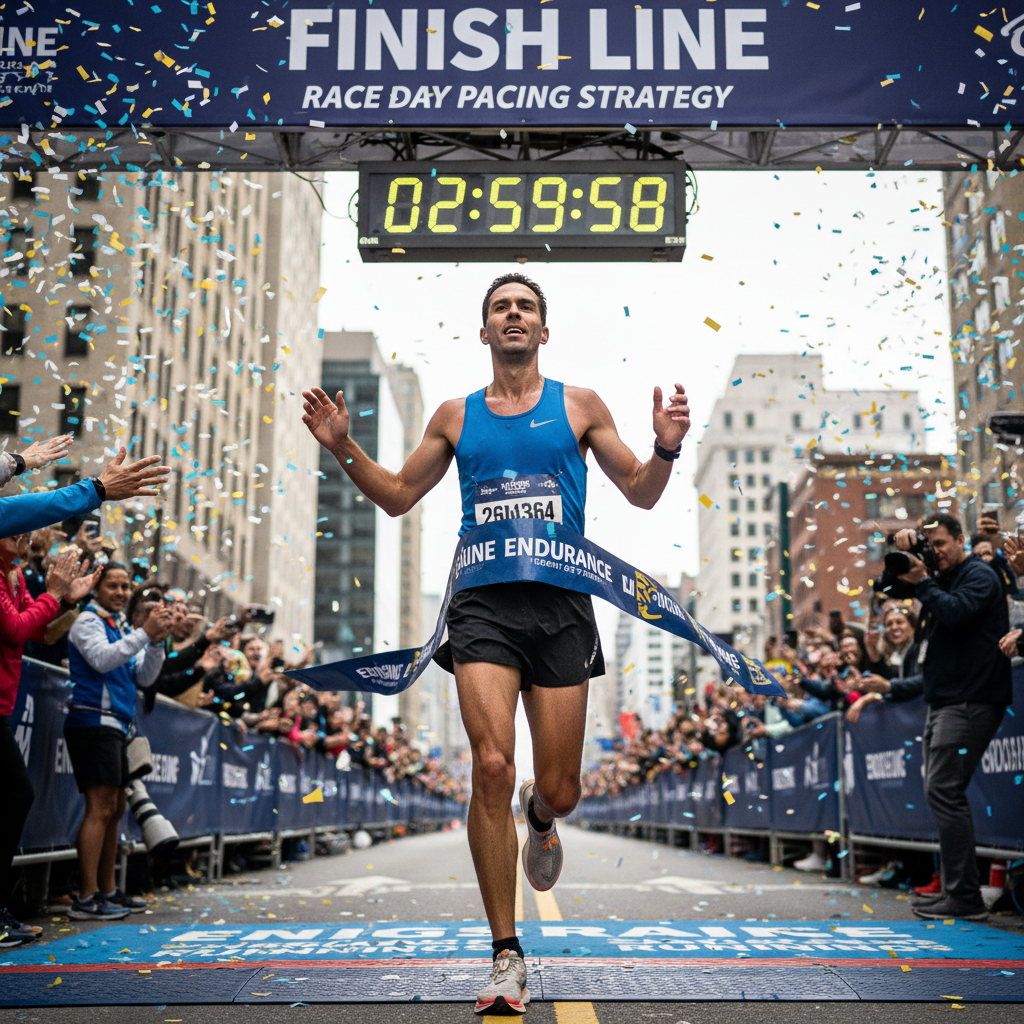












A Boston qualifier example is most useful when it shows the ordinary work behind the result, not just a finish photo and a fast time. If you are chasing Boston, the hard part is rarely one heroic session. It is building enough aerobic fitness to hold your goal pace late in the race, then fuelling well enough to actually use it.
I see runners train for a qualifying time as though it is a 30 km race. They can run their target pace in workouts, sometimes even for a strong half marathon, then fade badly from 32 km onwards. That is not a toughness problem. It is usually a mismatch between aerobic base, pacing and carbohydrate intake.
A Boston qualifier example: a 3-hour marathon
Let’s use a realistic example. A 42-year-old runner wants to run 3:00 at Melbourne Marathon. Their qualifying standard may differ by age group and sex, and the eventual Boston cut-off can require a buffer below the published standard, so this runner does not treat 3:00:00 as the safe target. They prepare to run 2:58 to 2:59.
A 3:00 marathon requires an average pace of 4:16 per kilometre. On paper, that looks simple. In practice, it means arriving at 30 km with your breathing, legs and stomach under control.
For this runner, I would want supporting evidence before locking in the goal. A half marathon around 1:25 to 1:27 is encouraging. So is a recent 10 km around 38 to 39 minutes. But race predictors are only clues. A runner with a strong half marathon and poor long-run fuelling can still lose 10 minutes in the final hour of a marathon.
The more useful questions are these: can they run 32 km with the final 10 km controlled? Can they absorb 75 to 90 grams of carbohydrate per hour? Can they stay patient when runners surge early? The answer to those questions determines whether 4:16/km is a race pace or a hopeful number on a watch.
Build the engine before marathon-specific work
For most busy runners, a 16 to 20-week block works well. The first six to eight weeks are about aerobic base: easy running that improves your ability to use oxygen and fat at sub-threshold effort. It is not glamorous, but it is where marathon durability comes from.
In this example, weekly volume might build from 55 km to 70 km, then peak around 80 to 90 km if the runner has handled that progression before. Someone currently running 35 km per week should not force their way to 90 km because a spreadsheet says so. They may be better served by a 70 km peak, more time in the build, and a healthy start line.
Most of those kilometres should feel genuinely easy. I would commonly use heart rate below the runner’s aerobic threshold, or an RPE of 2 to 3 out of 10. RPE means rating of perceived exertion. You should be able to speak in full sentences, even if your pace feels slower than you would like.
For a runner based around Geelong, an easy Barwon River run should not become a quiet race because the footpath is flat and familiar. Save the harder work for the sessions that need it. Easy days are where you absorb training and protect calves, Achilles tendons and shins.
The key sessions in the specific phase
Once the aerobic base is stable, marathon-specific training can take centre stage. I would usually include one threshold session, one long run with controlled marathon work, and enough easy running between them to recover.
Threshold is the strongest pace you can sustain for roughly an hour. It sits below VO2 max work and is highly useful for marathoners because it lifts the pace you can hold before lactate builds too quickly. For our 3-hour runner, a session could be 3 x 10 minutes at roughly 4:00 to 4:05/km, with two minutes easy jogging between repetitions. The effort should be firm, around RPE 7 out of 10, not a desperate final rep.
The long run progresses more carefully. Early in the block, 24 to 28 km easy is enough. Later, a 30 to 34 km run might include 12 to 16 km at 4:16 to 4:20/km, broken into blocks if needed. For example, 10 km easy, 3 x 5 km at marathon pace with 1 km easy between, then an easy cool-down. This teaches pace control while keeping the overall stress manageable.
Not every long run needs marathon pace. A fully easy 28 to 32 km run has value too, particularly after a demanding week. The trade-off is simple: marathon-pace work improves specificity, while easy long runs let you accumulate endurance with less recovery cost. Periodisation means arranging those stresses across the block so you improve rather than merely survive.
Pace the race as though the last 12 km count
A common qualifying attempt falls apart in the opening 10 km. The runner sees 4:10/km, feels fresh, and assumes they have found free speed. They have not. They have borrowed energy from later in the day at a very high interest rate.
For a 2:59 target, I would set the first 5 km at about 4:18 to 4:20/km, allowing for crowds and the natural adrenaline of the start. Settle into 4:15 to 4:16/km through halfway. If conditions are good and you are still controlled at 30 km, then you can decide whether to press.
That is not conservative racing. It is the fastest way to run close to your ability. Marathon pace should feel almost too easy in the first 15 km. Your breathing is controlled, your shoulders are relaxed, and you can take fuel without gasping for air. If you are already working at RPE 7 out of 10 at 8 km, the plan needs adjusting immediately.
Weather matters. A warm Melbourne morning, headwind, or a course with more turns than expected can change the cost of your pace. On those days, use effort and heart rate as guardrails, not just kilometre splits. Chasing a pace that your physiology cannot support is not mental strength.
Fuelling is part of the qualifying standard
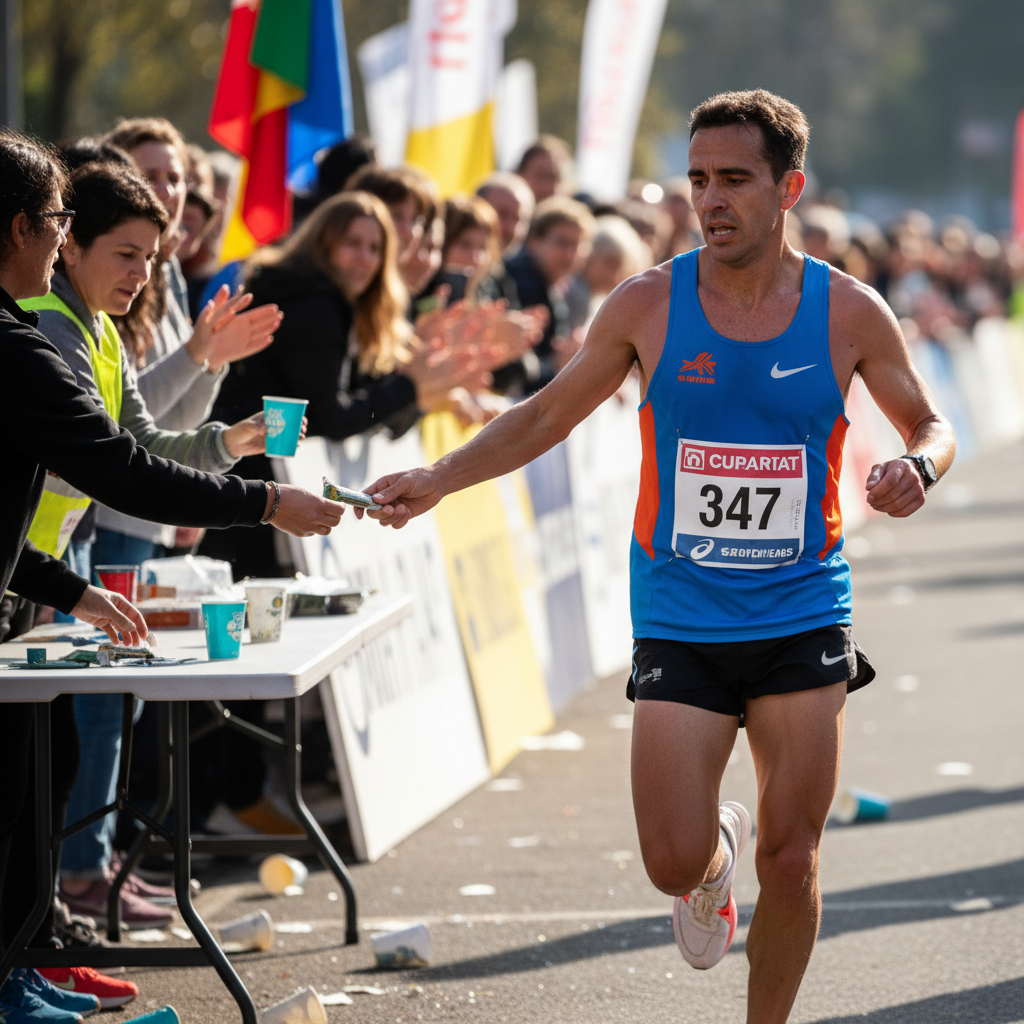
For this 3-hour Boston qualifier example, the runner practises taking 75 to 90 grams of carbohydrate per hour. That could mean a gel containing 25 grams every 20 minutes, beginning 20 minutes into the race, plus carbohydrate from sports drink where available. The exact product matters less than practising the same plan repeatedly in long runs.
Starting late is one of the biggest errors I see. Waiting until 90 minutes because you do not feel hungry leaves you trying to catch up when fatigue is already climbing. Carbohydrate taken early helps preserve liver glycogen and keeps blood glucose more stable. It supports the pace you trained for.
Fluid and sodium need individual testing too. As a starting point, many runners land around 400 to 800 mL of fluid per hour and 300 to 700 mg of sodium per hour, depending on sweat rate, heat and sodium losses. Do not copy your mate’s plan. Test your own gut during long runs, including runs that begin before breakfast if that resembles race morning.
The final two to three weeks are the taper. Volume comes down, but you keep short touches of marathon pace and threshold so the legs stay responsive. The goal is to reduce fatigue without feeling flat. You cannot gain meaningful fitness in the final fortnight, but you can easily arrive tired by cramming in one more oversized long run.
A Boston qualifier is earned through repeatable decisions: easy runs easy enough to recover, threshold work at the right effort, long runs that build durability, sensible early pacing, and fuel taken before you need rescuing. Use the free race diagnosis on geneconvery.com to work out which one is currently holding back your marathon.