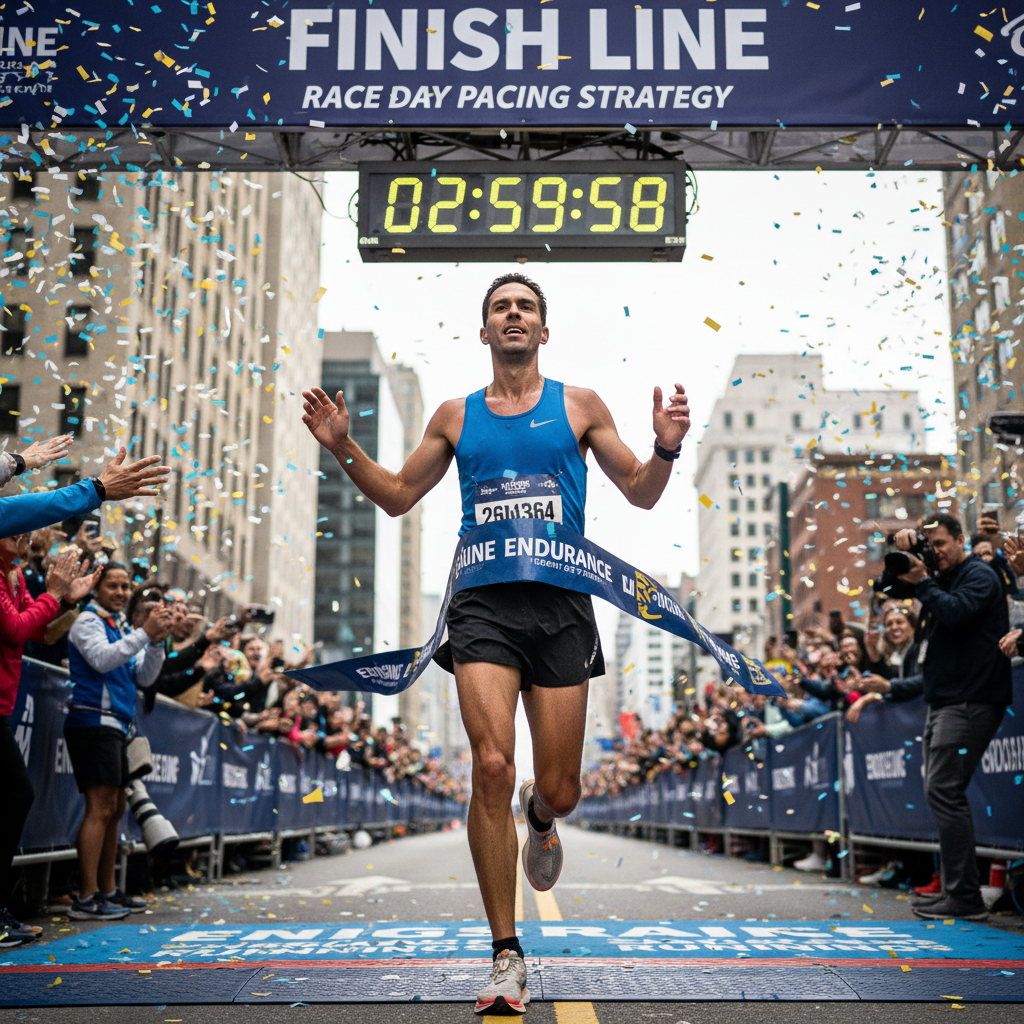





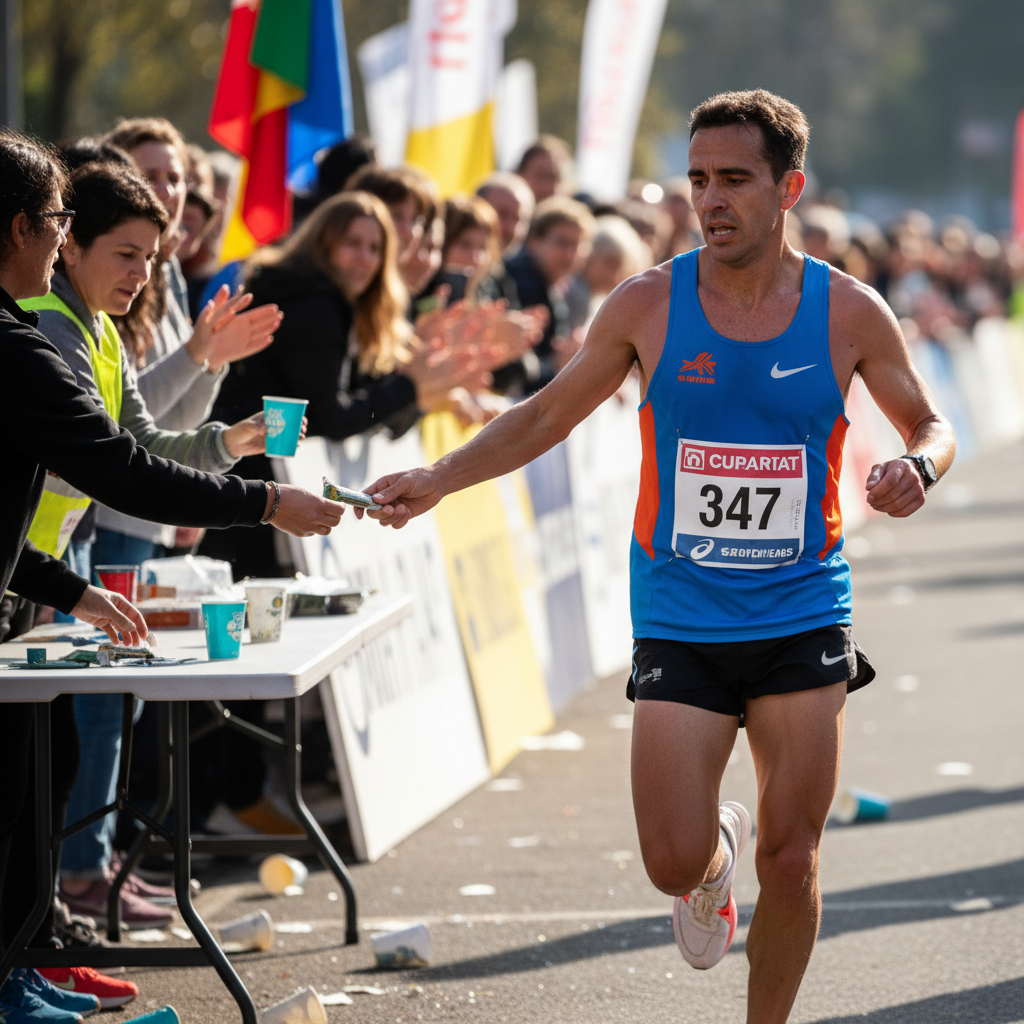







The half marathon exposes poor pacing faster than almost any other race. Go out 10 seconds per kilometre too hard and you might not notice at 3km. You will notice at 16km. A proper half marathon pacing guide is not about holding yourself back for the sake of caution. It is about distributing effort with enough discipline that you can race the full 21.1km rather than survive the final third.
For serious recreational athletes and competitive age-group runners, pacing is where training gets converted into performance. Fitness sets the ceiling, but pacing determines how much of that fitness you actually use on the day. The strongest result usually comes from measured execution, not early ambition.
What a half marathon pacing guide should actually do
A good pacing guide gives you a framework for effort, not just a target finish time. Plenty of runners make the mistake of locking onto an average pace and trying to force it from the gun. That approach ignores terrain, weather, crowd flow and the reality that the first 2km of a half marathon rarely feel the same as the last 5km.
The better model is to pace by controlled progression. Early kilometres should feel contained. The middle section should feel settled and repeatable. The final 5km should require intent, but still leave room to compete rather than fade.
If your pacing plan does not account for how the race unfolds physiologically, it is too simplistic. Half marathon racing sits close to lactate threshold. That means small pacing errors matter. A pace that feels only slightly aggressive at 4km can become unsustainable at 14km.
Start with your realistic goal pace
Before race week, decide whether your target pace is proven, probable or optimistic. That distinction matters.
A proven goal pace is supported by recent training. You have completed threshold sessions, long runs with quality, or lead-in races that point clearly to the result. A probable goal pace is slightly ahead of what you have done, but still grounded in strong preparation. An optimistic goal pace is what many runners want to believe on race morning, often based on best-case thinking rather than evidence.
Race your probable or proven pace. Optimistic pacing usually ends in damage control.
As a rough marker, your half marathon pace should sit a little slower than 10km pace and clearly faster than marathon pace. If you are unsure where that falls, recent workouts are often more useful than old personal bests. A runner who hit a fast half 18 months ago but has had inconsistent training since should not pace off that result.
A practical half marathon pacing guide by race segment
Kilometres 1 to 3: Controlled, not casual
The opening section is where races are most often lost. Adrenaline is high, the field is moving, and your legs feel fresh. If your goal pace is 5:00 per kilometre, opening in 4:45 pace because it feels easy is not a clever free gain. It is borrowed energy, and the interest rate is brutal.
Aim to settle 3 to 8 seconds per kilometre slower than average goal pace in the first 1 to 2km, then ease into target rhythm. This is especially true on crowded courses or any event with an uphill start. The key sensation is restraint. You should feel like you are letting the race come to you.
Kilometres 4 to 15: Build the race here
This is the section where good pacing becomes boring in the best possible way. You want repeatable rhythm, stable breathing and minimal pace drift. If your goal is realistic, this block should feel firm but sustainable.
Do not surge to make up seconds from a conservative start. Let the average come together naturally. Pacing in this phase is about concentration. Hold form. Stay relaxed through the shoulders. Keep cadence honest. If the course rolls, pace the effort, not every split. Forcing exact kilometre pace on every rise and fall usually costs more than it gives.
At around 12 to 15km, ask a direct question: can I hold this to the line, and do I have one more gear later? If the answer is yes, you are likely pacing well. If you are already bargaining with yourself, the early effort was probably too high.
Kilometres 16 to 21.1: Compete
The final section is where discipline gets paid. A well-paced half marathon should hurt late, but it should be an honest racing hurt, not a collapse.
From 16km onward, your job is to stay engaged. Hold posture. Keep the stride compact. Focus on the next runner, the next turn, the next kilometre marker. If you have paced correctly, this is where you can lift slightly or at least maintain while others slow.
A negative split is not mandatory, but it is often a sign of mature race execution. Even pacing is also strong. What you want to avoid is a major positive split caused by early overreach.
Should you use even splits or negative splits?
For most athletes, slight negative splitting is the smartest model. That does not mean jogging the first half and charging home. It means opening under control, settling into race pace, then lifting marginally in the final 5km if the day allows.
Even splits work well on flat courses in stable conditions, particularly for experienced runners with strong internal pacing. But race day is rarely perfect. Wind, heat, course profile and congestion all affect how pace presents. That is why effort-based execution usually beats rigid split-chasing.
If conditions are tough, especially in warm Australian races, your pacing plan should become more conservative. The same target pace that is manageable at 12 degrees can become costly at 24. On those days, preserving effort early is not weakness. It is race intelligence.
Pacing by feel, watch, or heart rate?
The best answer is usually a combination.
Your watch gives objective feedback, but it can be misleading on courses with turns, tree cover or tall buildings. Heart rate can help, but it often lags in the opening kilometres and rises through the race even when pace stays steady. Perceived effort remains essential because it captures what the body is telling you in real time.
Experienced runners learn to cross-check all three. If the watch says target pace but breathing is already strained at 5km, pay attention. If heart rate is a little high on a hot day, that may be normal. Context matters.
A pacing plan should guide decision-making, not replace it.
Common pacing mistakes that cost minutes
The first is treating taper freshness as proof of new fitness. Feeling amazing in the first 3km does not mean your sustainable pace has changed.
The second is making emotional decisions inside packs. If a group rolls through a little too quick, many runners go with them because it feels efficient. It is only efficient if it matches your capacity.
The third is trying to bank time. In the half marathon, time banking rarely works unless the course is heavily front-loaded and your effort stays controlled. More often, those early gains get repaid with heavy losses later.
The fourth is ignoring course specifics. A flat road half and a hilly regional event are not paced the same way. Neither are cool winter races and exposed warm-weather races.
How training should support race pacing
A pacing plan only holds up if training has prepared you for it. Threshold intervals, race-pace blocks within long runs, and progression runs all teach the body and mind how half marathon effort should feel. Without that rehearsal, race pace can remain theoretical.
This is where structured coaching makes a clear difference. At Gene Convery Endurance Academy, pacing is developed in training, not guessed on the start line. Athletes learn what sustainable pressure feels like, how to respond to drift, and when to press.
If your sessions are all one speed, race execution becomes harder. Half marathon performance depends on knowing the difference between controlled, steady and overcooked.
A simple race-day pacing mindset
Think of the half marathon in three jobs. First, stay calm. Second, stay accurate. Third, stay competitive.
Calm prevents the reckless start. Accurate keeps you on the right side of threshold through the middle. Competitive allows you to race hard when it counts.
That sequence sounds straightforward, but it takes discipline. The runners who execute best are rarely the most excited early. They are the ones who respect the distance enough to race it properly.
If you want your best half marathon, pace the first half with patience and the second half with intent. That is not conservative racing. That is how strong performances are built.