





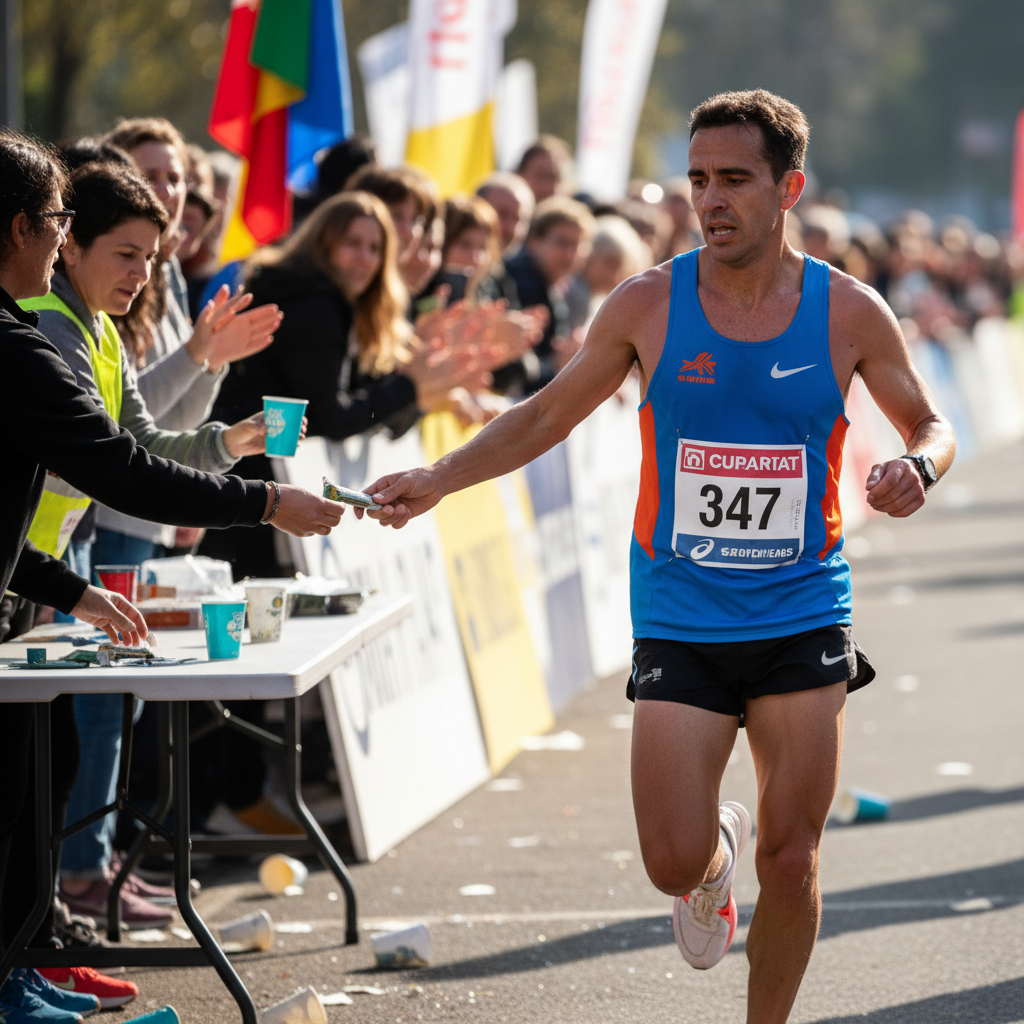







A strong Sunday long run is not proof of a strong training week if it leaves you unable to execute Tuesday's key session. Knowing how to balance endurance training means seeing every session in context: its purpose, its cost, and whether it moves you towards the athlete you want to be on race day.
For runners, cyclists and triathletes, the challenge is rarely a lack of willingness to work. More often, it is too much work placed in the wrong places. Endurance performance is built through accumulated quality over months, not through isolated heroic sessions that disrupt the following fortnight.
Start with the race demand, not the training habit
Balance begins by defining what you are preparing for. A marathon, gran fondo, half-Ironman and trail ultra each place different demands on the body. Distance matters, but so do terrain, elevation, expected duration, heat, fuelling requirements and the intensity you can realistically sustain.
From there, identify the abilities that will decide your result. A marathoner may need aerobic durability, threshold speed and resilience late in the race. A cyclist targeting a hilly event may need climbing strength, repeatable power and the capacity to recover while still moving. A triathlete must develop all three disciplines without allowing one to drain the quality from the others.
This is why copying a mate's program or adding sessions because they look impressive on a training platform usually fails. Training only becomes balanced when each hard session, long session and easy session has a clear role in the larger plan.
How to balance endurance training across a week
A useful weekly structure protects the sessions that matter most. For many athletes, that means one or two quality workouts, one long endurance session, and genuinely easy aerobic work around them. The exact arrangement depends on training age, event demands, available time and recovery capacity.
If you are a busy age-group athlete, three demanding sessions may already be plenty. A hard interval workout, a threshold or race-specific workout, and a long ride or run can create a productive week when supported by easy volume. Adding a fourth hard day because you feel good can quickly turn the whole week into moderate fatigue, where nothing is easy enough to recover from and nothing is hard enough to produce a quality adaptation.
Triathletes need to consider the combined load, not just the sessions within each sport. A hard bike workout can compromise the next day's run even if your legs do not feel sore at the start. Swimming is often less mechanically demanding, but a high-volume or hard swim block still contributes to total fatigue. Plan the week as one endurance system, not as three separate programs.
A common pattern is to separate key running sessions by at least 48 hours, particularly for athletes building mileage or managing a history of injury. Cycling can provide valuable aerobic volume with less impact, while swimming may support fitness and technique without adding another pounding session. Those are useful tools, not automatic excuses to stack more work into every spare hour.
Keep easy training easy enough to work
Most endurance development comes from aerobic work that can be repeated consistently. Easy sessions improve aerobic capacity, movement economy and fatigue resistance while allowing you to arrive ready for the workouts that require real intent.
The problem is that easy training often drifts. Pace rises because the group is moving well, the route is competitive, or you want the data to look better. Before long, recovery runs become steady runs and endurance rides become low-grade races. The cost is higher than the benefit.
Use practical controls. For running, this may mean a conversational effort, a heart-rate cap, or a pace that feels almost restrained early. On the bike, endurance work should allow you to finish with control rather than needing an extended recovery period. In hot Australian conditions, pace and power may need to come down substantially. Effort, hydration and heart rate are more useful guides than forcing numbers that made sense on a cool morning.
Intensity distribution is not a rigid rule. Some athletes respond well to a mostly easy base with clearly separated hard sessions. Others, particularly those in a race-specific block, may carry more controlled tempo work. What matters is that the distribution matches your experience, event and ability to recover. If every session feels moderately difficult, the distribution is almost certainly wrong.
Match training load to your current capacity
The best program is not the most ambitious one. It is the one you can absorb, repeat and progress. An athlete returning from injury, illness, work travel or a low-volume background should not train like someone who has built durable consistency for five years.
Progress one variable at a time wherever possible. You might extend the long ride, add a small amount of easy running volume, or increase interval density. Doing all three in the same week makes it difficult to identify what caused fatigue or soreness. It also magnifies injury risk.
Watch for trends rather than judging one bad day. Rising resting heart rate, disrupted sleep, persistent heaviness, unusual irritability, declining motivation and a loss of normal pace or power at easy effort can all signal that load is exceeding recovery. None of these measures is perfect alone. Together, they give a clearer picture.
Training data is useful when it informs judgement. It becomes unhelpful when it pushes you to complete a prescribed session despite a body that is clearly not ready. An adjusted workout is not a missed opportunity. It is often the decision that preserves the next three weeks of training.
Make recovery a programmed part of performance
Recovery is not what happens when training is finished. It is where the adaptation occurs. Sleep, sufficient carbohydrate around demanding work, protein across the day, hydration and lower-stress days all influence whether you gain fitness from the sessions you complete.
For endurance athletes, under-fuelling is one of the most common ways a sensible plan becomes unsustainable. Long sessions and intensity require carbohydrate. If you repeatedly train depleted, you may feel disciplined, but you are more likely to compromise session quality, recovery, mood and immune function. Practise race fuelling during key long sessions, especially when preparing for events lasting more than two hours.
Recovery weeks also deserve planning. After several weeks of progressive load, a reduced-load week can consolidate training and restore freshness. It does not mean doing nothing. Usually, volume comes down while a small amount of intensity remains, so you retain rhythm without carrying the same fatigue.
Let life set the boundaries
Work deadlines, family demands, travel and poor sleep are part of an adult athlete's training environment. Ignoring them is not mental toughness. It is poor load management.
When life stress rises, protect the most valuable session and reduce the less important volume. If you have only four training opportunities in a demanding week, choose the work that serves your goal rather than trying to squeeze in every planned kilometre. A short, well-executed threshold session may be more useful than a tired two-hour ride performed out of guilt.
Be equally cautious with catch-up training. Missing a session is normal. Trying to force it into an already full week often creates a sequence of compromised work. Let the plan move forward. Fitness does not disappear because one session was missed, but consistency can disappear when athletes repeatedly overcorrect.
Review the plan before fatigue makes the decision
A balanced plan is reviewed, not blindly followed. At the end of each week, assess whether the key sessions were completed at the intended quality, whether easy sessions stayed easy, and whether fatigue is resolving as expected. Also ask a more direct question: could you repeat a similar week next week?
If the answer is no, the issue may be volume, intensity, fuelling, sleep, session placement or expectations. The solution is not always to do less. An athlete with too little aerobic volume may need more easy work, while an athlete constantly depleted by demanding sessions may need less intensity. Context decides the adjustment.
At Gene Convery Endurance Academy, the objective is not to fill a calendar with impressive sessions. It is to build athletes who can train with purpose, recover with discipline and arrive at the start line ready to perform.
The next time you consider adding an extra hard effort, ask what it will improve and what it may compromise. The most valuable training decision is often the one that lets you turn up tomorrow ready to do the work that counts.