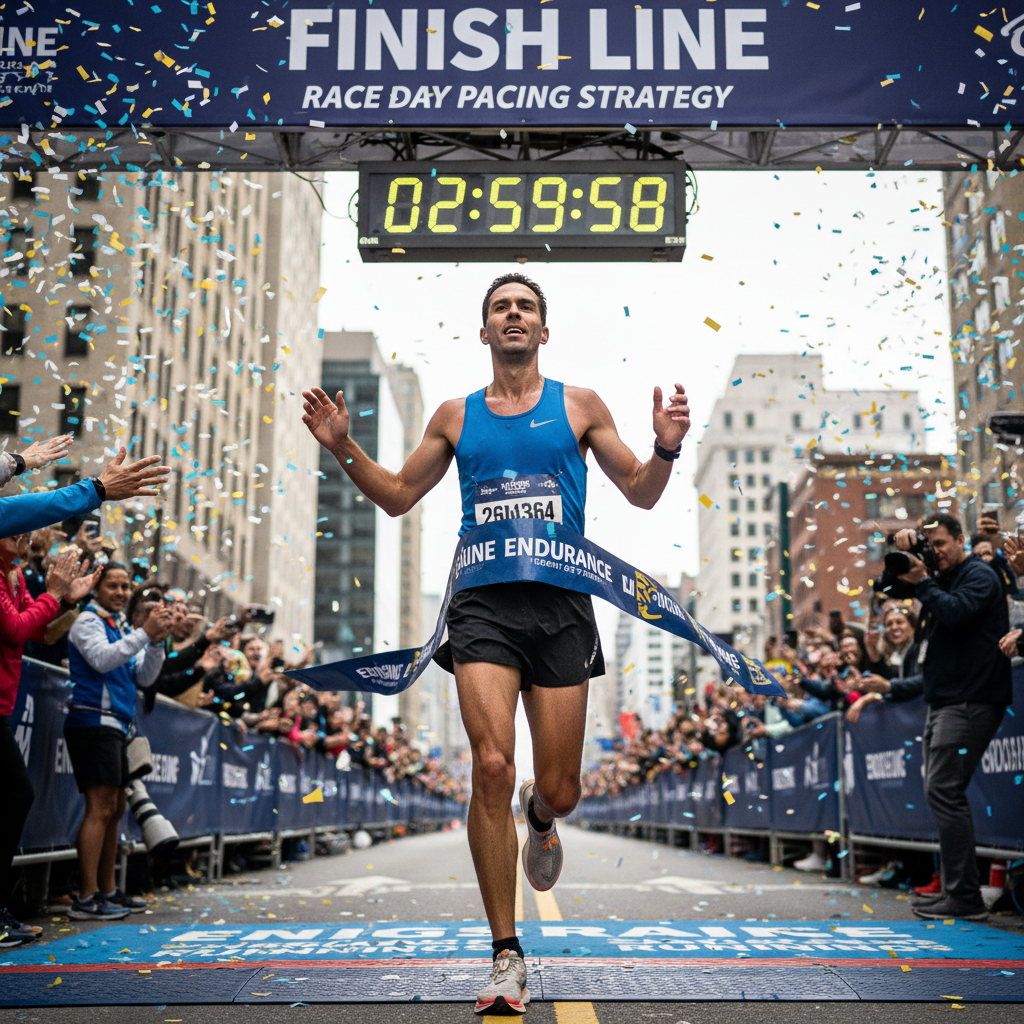












The marathon coaching success story most runners want starts with a finish-line photo. The useful part starts months earlier, usually with an honest look at why the last race fell apart.
For one runner I coached, that moment was at 32km. He had trained consistently for Melbourne Marathon, completed long runs, and felt confident at halfway. Then his quads tightened, his pace drifted by more than 45 seconds per kilometre, and gels became hard to swallow. He did not lack toughness. He had a pacing problem, a fuelling problem and a training load that had not prepared him to hold marathon effort when tired.
That combination is common. It is also fixable, provided you stop treating training, pacing and fuelling as separate jobs.
The marathon coaching success story began with less effort
He came to me wanting a faster marathon. His first instinct was predictable: more speed sessions, bigger long runs and a harder push through the week.
Instead, we started with his recent training data. His easy runs were mostly being run at 5:05 to 5:20 per kilometre. For his current fitness, they belonged closer to 5:35 to 6:00 per kilometre, or roughly the upper end of Zone 2 by heart rate. He was making the days designed for aerobic development too hard, then arriving at quality sessions too fatigued to get the intended benefit.
Your aerobic base is the capacity to use oxygen efficiently at sustainable effort. It is not glamorous, but it determines how much marathon pace costs you. When that base is underdeveloped, marathon pace can feel controlled at 15km and wildly expensive at 32km.
For the next eight weeks, we slowed his easy running and gave the week clearer jobs. Most kilometres stayed genuinely easy. One threshold session built his ability to clear and reuse lactate at a hard but controlled effort. Threshold is not a sprint. It is usually around RPE 7 out of 10, where you can manage short phrases but would not want to chat.
His sessions included efforts such as 3 x 10 minutes at threshold with two minutes easy jogging, plus a long run that gradually grew from 22km to 28km. The aim was not to win training. It was to complete each session well enough to absorb it, recover, and repeat it the following week.
Training volume had to fit his real week
He was a busy parent with work commitments, so seven running days were never the answer. We built from about 42km per week to a consistent 58 to 65km per week across five days. That was enough volume for his goal because it was repeatable.
A 75km week followed by injury, exhaustion or missed sessions is less useful than six steady weeks in the low 60s. This is where periodisation matters. Training load rises in purposeful blocks, then comes back slightly before the next block. You do not need to feel wrecked to be progressing.
His long run also changed. Previously, every Sunday had become a test. He would run the first half hard, hang on late, and need several days to recover. We kept most long runs easy, then added controlled work in selected runs. One key session was 30km with the final 10km near planned marathon pace, only after he had built the durability to handle it.
That session tells you far more than a fast 10km on fresh legs. It asks whether your form, focus, stomach and pacing can hold together after two hours of running.
Pacing was the difference between a good start and a good race
In his first marathon, he ran the opening 10km around 10 seconds per kilometre faster than his realistic target. That sounds harmless. Over a marathon, it is not.
Marathon pacing is a restraint problem. The first 5km should feel almost too easy. If you are chasing people down early because the atmosphere has got to you, you are spending energy you will need later.
We set a pace range rather than one magic number. His target was 5:05 to 5:10 per kilometre, based on threshold work, long-run performance, current weekly kilometres and the course. In the first 5km, he was allowed to sit at the slower end. He was not allowed to go quicker than 5:05, even if his legs felt brilliant.
We also used heart rate as a guardrail, not a dictator. Heart rate rises naturally through a marathon because of fatigue, heat and dehydration. But if it climbs sharply in the first hour while pace stays steady, it can signal that the effort is too high for the day. On a warm Melbourne morning or a windy run along the Geelong waterfront, pace targets may need adjusting.
That is the trade-off many runners miss. A goal time matters, but finishing strongly sometimes means accepting a slower opening pace. Holding back is not failure. It is race craft.
Fuelling training stopped the late-race fade
His old race-fuelling plan was one gel every 45 minutes, with no practice beyond the occasional long run. That provided roughly 35 to 40 grams of carbohydrate per hour. It was not enough for the effort he was trying to sustain.
We trained his gut alongside his legs. For marathon running, I will often start a runner around 45 to 60 grams of carbohydrate per hour, then build higher if the goal pace, duration and gut tolerance call for it. In his case, we worked up to 70 grams per hour across long runs and marathon-pace sessions.
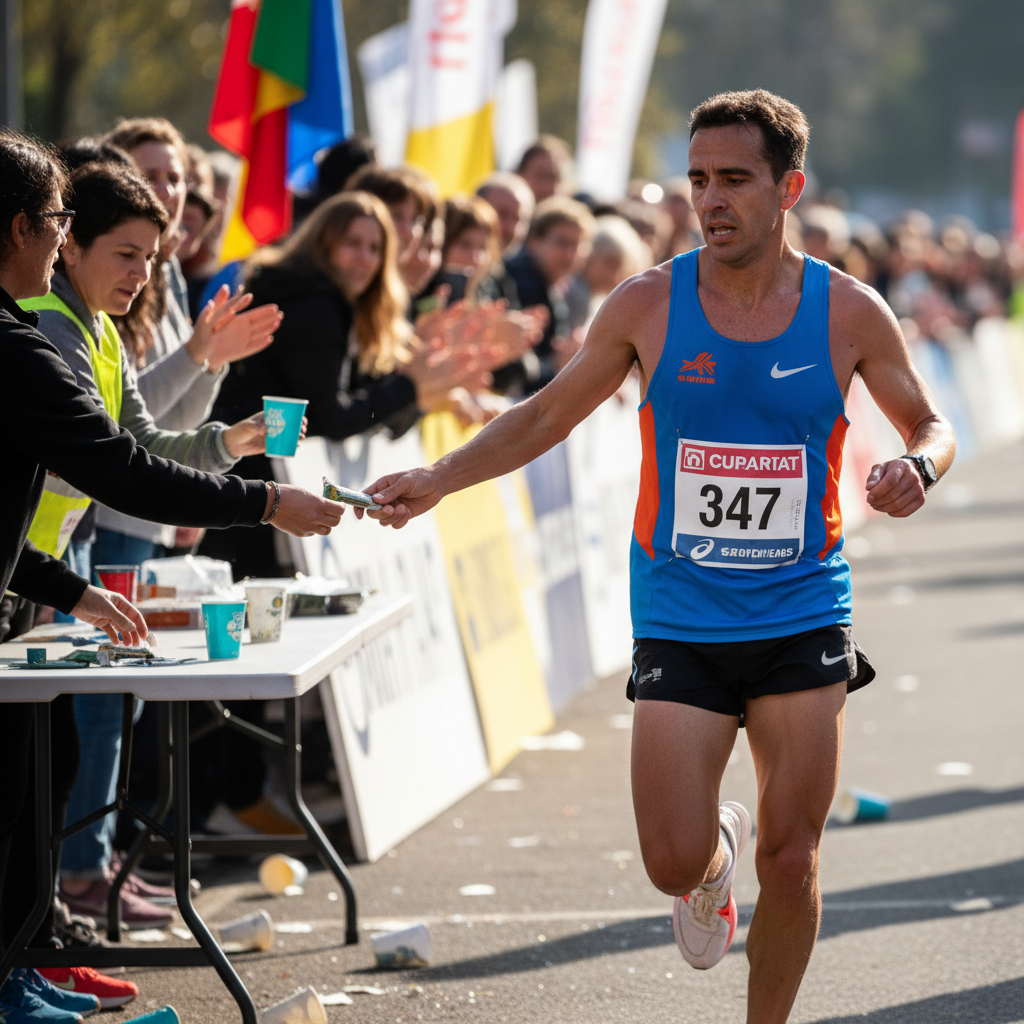
The key was regular intake. He took carbohydrate early, beginning at about 20 minutes, then every 20 minutes after that. Waiting until you feel flat is too late. By then, your blood glucose may be dropping and your gut may be less willing to cooperate.
We also considered fluids and sodium. There is no universal sweat rate or sodium number. A cool, still morning around the Barwon River demands a different plan from a warm, exposed race day. He practised drinking to thirst with a planned range, while using sodium consistently enough to match his sweating conditions and the products he had chosen.
Nothing new appeared on race day. That is the point of gut training. Your gut adapts to carbohydrate intake under running stress, but only when you practise it.
The result was not perfect, which made it useful
On race day, he began patiently. His first 5km sat just slower than target. At halfway, he still felt controlled. At 30km, where his previous race had started to unravel, he was working hard but remained on plan.
The final 7km hurt. A marathon should hurt when you are racing to your ability. But the difference was that he was still making decisions. He kept taking carbohydrate, stayed close to his pace range, and passed runners who had gone out too hard.
He finished more than 20 minutes faster than his previous marathon, with a small negative split. More importantly, he finished knowing why it worked. It was not a miracle session, a lucky pair of shoes or more motivation. It was a better aerobic base, sensible progression, disciplined pacing and a fuel plan his gut had rehearsed.
That is what I want from a marathon plan. Not a promise that every race will be perfect. Heat, illness, work stress and bad weather can all change the outcome. I want you to understand the levers you can control, then use them calmly when the race gets difficult.
If your last marathon fell apart after 30km, get a free race diagnosis on geneconvery.com. Bring your splits, weekly kilometres and what you ate and drank. The pattern is usually there.