






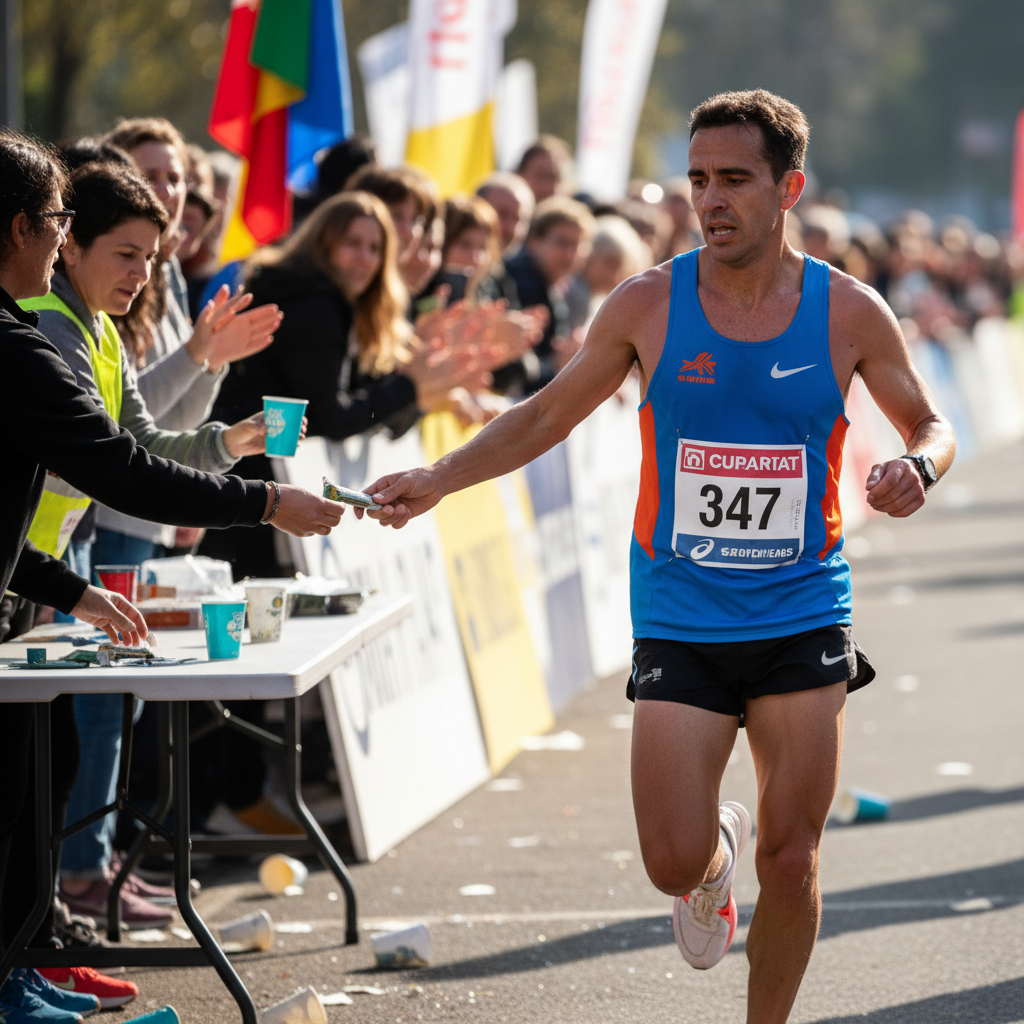






You have done the work. The weekly kilometres are there, your long run is becoming routine, and yet your half marathon or marathon time refuses to move. That frustration is exactly why do runners plateau becomes such a common question. Usually, the problem is not a lack of effort. It is that your training stress, recovery and fuelling no longer match the result you want.
I see this with runners training around work and family in Geelong, Melbourne and the Surf Coast all the time. They are committed, but their easy days are a little too hard, their hard sessions are not targeted enough, and they are trying to build fitness while under-fuelling it. That combination can hold a runner at the same pace for months.
Why do runners plateau despite running more?
Your body adapts to training it can recover from. Once it has adapted, repeating the same week produces maintenance, not improvement. Running 45 kilometres every week at roughly the same pace may have built your first solid base. But after several months, it may simply be enough to keep you where you are.
The answer is not automatically more kilometres or harder sessions. A plateau is a signal to assess the whole system: aerobic base, threshold, long-run durability, pacing, recovery and race fuelling. The weakest link is often not the one you notice first.
Your easy runs are quietly becoming moderate runs
This is the most common issue I see. A runner wants every run to feel productive, so their easy pace gradually drifts up. They run at an RPE of 5 or 6 out of 10 - controlled, but not genuinely easy. They finish tired enough to compromise the next quality session, but not fast enough to gain the specific benefits of threshold or VO2 max work.
Easy running should usually feel like an RPE of 2 to 4. You should be able to speak in full sentences. For many runners, that means staying in a genuinely aerobic heart-rate zone, often below the first threshold where breathing begins to change noticeably. The pace can feel almost embarrassingly slow on a warm day, after poor sleep, or on the rolling paths around the Barwon River. That is normal.
When easy days are easy, you can run more total aerobic volume and bring better legs to your hard sessions. This is how you build the aerobic base that supports a faster marathon late in the race, not just a quick first 10 kilometres.
You keep repeating the same stimulus
If your usual week is two steady runs, one interval session, one long run and no real change for 16 weeks, your body gets very efficient at handling it. Efficient is good. Stagnant is not.
Progress needs periodisation: planned changes in training focus across a block. A marathon runner might spend several weeks extending aerobic volume, then move towards threshold development and marathon-pace durability. An ultra runner preparing for 50km or 100km may shift the focus towards climbing strength, long descents, time on feet and fuelling under fatigue.
That does not mean reinventing training every Monday. It means making one purposeful progression at a time. You might extend a threshold session from 3 x 8 minutes to 3 x 12 minutes, add 15 to 20 minutes to a long run every second week, or gradually increase your weekly kilometres if you are recovering well. The change should be small enough to absorb, then held long enough to work.
Your threshold pace is guessed, not measured
Threshold is the hardest pace you can sustain for roughly an hour when fresh. It sits below all-out effort but above easy aerobic running. It matters because it is a major driver of performance from 10km through to the marathon.
Many runners do threshold sessions too fast. They turn a controlled 20- to 40-minute workout into repeated near-maximal efforts, then need days to recover. Others go too easy and never create enough stimulus.
Use a recent race result, a properly paced field test or heart-rate data to set the session. At threshold, the effort should be firm and focused, around RPE 7 to 8, but repeatable. You should finish knowing you could have done one more interval with good form. If your pace falls sharply from the first rep to the last, you started too hard.
The plateau may be a fuelling problem, not a fitness problem
A runner can be fit enough to improve but fail to show it because they are chronically under-fuelled. This is especially common in busy runners who squeeze in an early session, grab a coffee, eat lightly all day and then wonder why the evening run feels flat.
Low energy availability does not always feel dramatic. It may look like stale legs, poor sleep, a heart rate that is unusually high at easy pace, or a session that starts well and falls apart after 40 minutes. It also makes it harder to build training consistently.
For runs longer than 75 to 90 minutes, practise taking carbohydrate during the run. A sensible starting point is 30 to 45 grams per hour, then build towards 60 grams per hour if your event demands it. Marathon runners aiming to race hard often benefit from practising 60 to 90 grams per hour, but only if the gut has been trained gradually. For ultras, the right amount depends on duration, intensity, terrain and what you can tolerate over many hours.
Do not save fuelling practice for race day. A runner who bonks at 30km in the Melbourne Marathon has often trained their legs well but never trained their gut to process carbohydrate at marathon effort. The same applies to hydration and sodium. Sweat losses vary widely, but 300 to 600 milligrams of sodium per hour is a practical starting range for many runners in long events, adjusted for heat, sweat rate and experience.
You never let fatigue dissipate
Training only works when recovery catches up. If every week is a build week, you will eventually carry fatigue into every key session. Your watch may call it declining fitness. More often, it is accumulated tiredness.
A useful structure for many runners is two or three progressive weeks followed by a lighter week. In that lighter week, reduce total kilometres by roughly 20 to 30 per cent, keep a little intensity, and let the body absorb the work. The exact pattern depends on your training history and life load. A parent with broken sleep may need a lighter week sooner than a runner with a predictable schedule.
Recovery also means being honest about your available bandwidth. If work is intense, it may be smarter to hold mileage steady and protect one quality workout than force a big volume jump. Consistency across six months beats one heroic fortnight followed by calf, Achilles or shin trouble.
A practical reset when progress has stalled
Before adding another hard session, spend two weeks collecting useful information. Note your heart rate and RPE on easy runs. Check whether your pace changes at the same heart rate. Record what you eat before long runs and how many grams of carbohydrate you take per hour. Look at whether your long-run pace fades after 90 minutes.
Then make changes in order. First, slow the easy runs enough to recover properly. Second, choose one clear quality focus, such as threshold development or marathon-pace work. Third, progress your long run gradually while fuelling it properly. Finally, schedule a lighter week before fatigue forces one on you.
A runner training for a first marathon may improve simply by moving from 35 to 45 kilometres per week over several months, with most of that extra distance easy. A more experienced runner chasing a Boston qualifier may already have enough volume but need better threshold targeting and a race fuel plan that prevents the late-race fade. A trail runner heading to the You Yangs or Surf Coast Century may need to replace some flat speed with climbing and downhill durability. The fix depends on the event and the runner.
Plateaus are not proof that you have reached your limit. They are useful feedback. Your next breakthrough may come from running slower on Tuesday, fuelling better on Sunday, or finally giving one training block a clear purpose.
Use the free race diagnosis on geneconvery.com to identify the biggest limiter in your training, pacing and fuelling before you add more work.