










An ultra can unravel long before your legs give out. You feel fine at 30km, skip a gel because the next aid station is close, push a climb a little too hard, then spend the next two hours dizzy, flat and unable to eat. Knowing how to fuel ultra running is not about finding one magic gel or copying what the fastest runner carries. It is about matching carbohydrate, fluid and sodium to your race duration, pace, conditions and gut capacity.
I plan fuelling alongside training and pacing because they affect each other. Run above your sustainable aerobic effort for too long and your gut will often stop cooperating. Underfuel a manageable pace and the same thing happens later. A good ultra fuelling plan starts with the work you do in training, not the menu at the pre-race briefing.
Start with carbohydrates per hour
Carbohydrate is the main performance fuel in an ultra. You have stored glycogen in your muscles and liver, but it is limited. Even a well-fuelled runner cannot rely on those stores for a 50km, 100km or 100-mile race.
For most runners, I start with 60 grams of carbohydrate per hour. That is a practical target for a first 50km or a race likely to take five to eight hours. It might be two standard gels plus sports drink, or a mix of drink mix, chews, lollies and real food. The exact products matter less than the total you can consistently tolerate.
For races beyond eight hours, or runners racing hard over 50km to 100km, 70 to 90g per hour is often a better target. At this level, use products containing multiple carbohydrate sources, commonly glucose and fructose. The gut can absorb more carbohydrate when it has more than one transport pathway available.
Going straight to 90g per hour because it sounds faster is a common mistake. More is only better if your gut has been trained for it. If you currently manage 40g per hour, build towards 60g first across several long runs. Then test 70g or more in selected race-specific sessions.
Start early. Take in your first carbohydrate within 20 to 30 minutes, not when you feel tired. By then, you are already chasing an energy deficit. Set a repeating alert on your watch if you tend to get distracted by trails, conversation or aid-station chaos.
How to fuel ultra running on trails
Trail ultras create a different problem from a road marathon. Your effort changes constantly. A steep climb may take your heart rate above aerobic threshold even though your pace is slow. A hot exposed section at the You Yangs or a long runnable fire trail can turn a sensible plan into an underfuelled day if you only eat at aid stations.
Fuel to time, not kilometres. On technical terrain, kilometres are unreliable. Ten kilometres might take 55 minutes or two hours. Your body does not care what the course marker says - it needs carbohydrate every hour.
I also want trail runners to separate fuel from reward. Aid-station food is enjoyable and can lift your mood, but it should not be the foundation of the plan. If an aid station is delayed, poorly stocked or the food suddenly sounds awful, you still need enough carbohydrate in your vest to cover the next section.
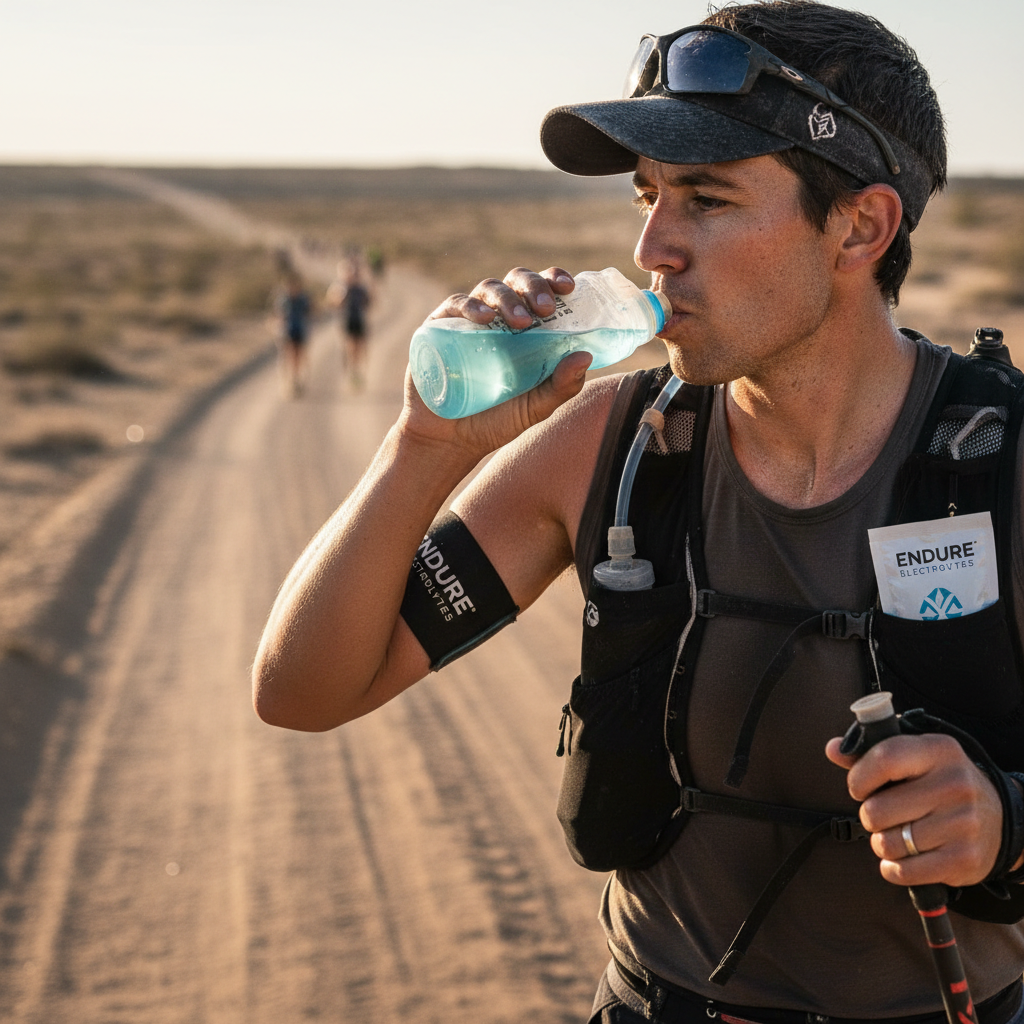
Carry a simple hourly system. For example, if your target is 75g per hour, you might drink 30g from your flasks and eat 45g from gels or chews. Keep one or two backup items in a separate pocket. This removes the need to do maths when you are tired.
Real food has a place, particularly in races lasting 10 hours or more. Small portions of banana, plain potato, rice-based snacks, soft sandwiches or salty crackers can provide variety when sweet products become hard to face. But real food is usually less carbohydrate-dense and slower to eat. Use it to complement, not replace, your measured carbohydrate intake.
Match fluids and sodium to the conditions
There is no universal fluid target. Sweat rate varies with body size, pace, temperature, humidity, clothing and acclimatisation. A cool dawn start on the Surf Coast needs a different plan from a warm afternoon on exposed trails.
A useful starting range is 400 to 800mL of fluid per hour. Smaller runners in cool conditions may sit below this range. Larger runners, heavy sweaters and runners racing in heat may need more. Avoid drinking to a rigid number if you are sloshing, repeatedly stopping for toilets or gaining weight during a long run. Equally, do not wait until you are desperately thirsty.
Sodium needs also vary. For many runners, 300 to 600mg per hour is a sound starting point. In hot conditions, for salty sweaters, or for long events with heavy fluid losses, 600 to 1,000mg per hour can be appropriate. Sodium helps replace some of what you lose in sweat and makes it easier to keep drinking, but it cannot compensate for poor pacing or an inadequate carbohydrate plan.
Test your plan rather than guessing. Weigh yourself before and after a two-hour long run in similar conditions, with a known amount of fluid carried and consumed. This gives you a useful indication of sweat loss. You do not need to replace every millilitre during the run. The goal is to finish functional, not to finish at exactly your starting weight.
Train your gut like you train your aerobic base
Your gut is trainable. If you only consume water on easy runs and then ask your stomach to process 80g of carbohydrate per hour on race day, problems are predictable.
Practise fuelling on long runs, especially those that include race-like intensity. Start with 40 to 50g per hour and increase by 10g at a time. Keep the dose consistent for two or three long runs before adding more. Include fluids and sodium too, because concentrated carbohydrate without enough fluid can be difficult to tolerate.
The most valuable session is often a three- to five-hour simulation during the specific phase of your training. Run at your planned ultra effort - usually an easy aerobic RPE of 3 to 4 out of 10 on flats, with disciplined hiking on steep climbs. Wear the vest, use the flasks and eat the exact products you intend to carry. If you cannot take in the planned fuel at this effort, solve that in training.
Pacing is part of gut training. At a controlled aerobic effort, blood flow and breathing are more manageable. Surge repeatedly above threshold, and digestion often becomes harder. For many trail runners, hiking the steepest climbs early is not conservative. It is the fastest way to protect your legs, gut and fuel intake for the final third.
Build a race plan, not a pile of snacks
Your race plan should show what you will consume each hour, what you will carry between aid stations and what you will collect at each stop. Keep the first half simple and familiar. Save optional foods, caffeine and flavour changes for later, when they can make a genuine difference.
Caffeine can be useful, but it is not compulsory. If you already use it well, a modest dose of 1 to 3mg per kilogram of body weight, split across the later stages, may improve alertness and perceived effort. Test it first. Taking it early, after poor sleep, or alongside unfamiliar products can leave you more unsettled than energised.
Before the race, eat a familiar carbohydrate-rich meal. For a morning start, most runners do well with 1 to 3g of carbohydrate per kilogram in the one to three hours beforehand, adjusted for appetite and start time. Keep fibre, fat and novelty low. The goal is steady energy, not forcing down a huge breakfast.
If your stomach starts turning during the race, do not simply stop fuelling for hours. First, bring your effort down. Walk a climb, cool yourself where possible, take small sips and switch temporarily to easier-to-digest carbohydrate sources. Then rebuild intake in small, regular amounts. A short adjustment is usually better than letting a manageable problem become a full bonk.
The runners who finish strongly at events such as Surf Coast Century are rarely guessing. They have practised their intake, respected their aerobic ceiling and made fuelling decisions before the hard kilometres arrive. Before your next long run, use my free Fuel and Hydration Planner to turn these ranges into an hourly plan you can test.